
When OT gets connected: building cyber resilience into research vessel operations
As operational technology becomes increasingly connected, cyber resilience is no longer simply an IT concern. For research vessels in particular, the convergence of digital and operational systems is changing both the risk landscape and the way cyber resilience needs to be approached.
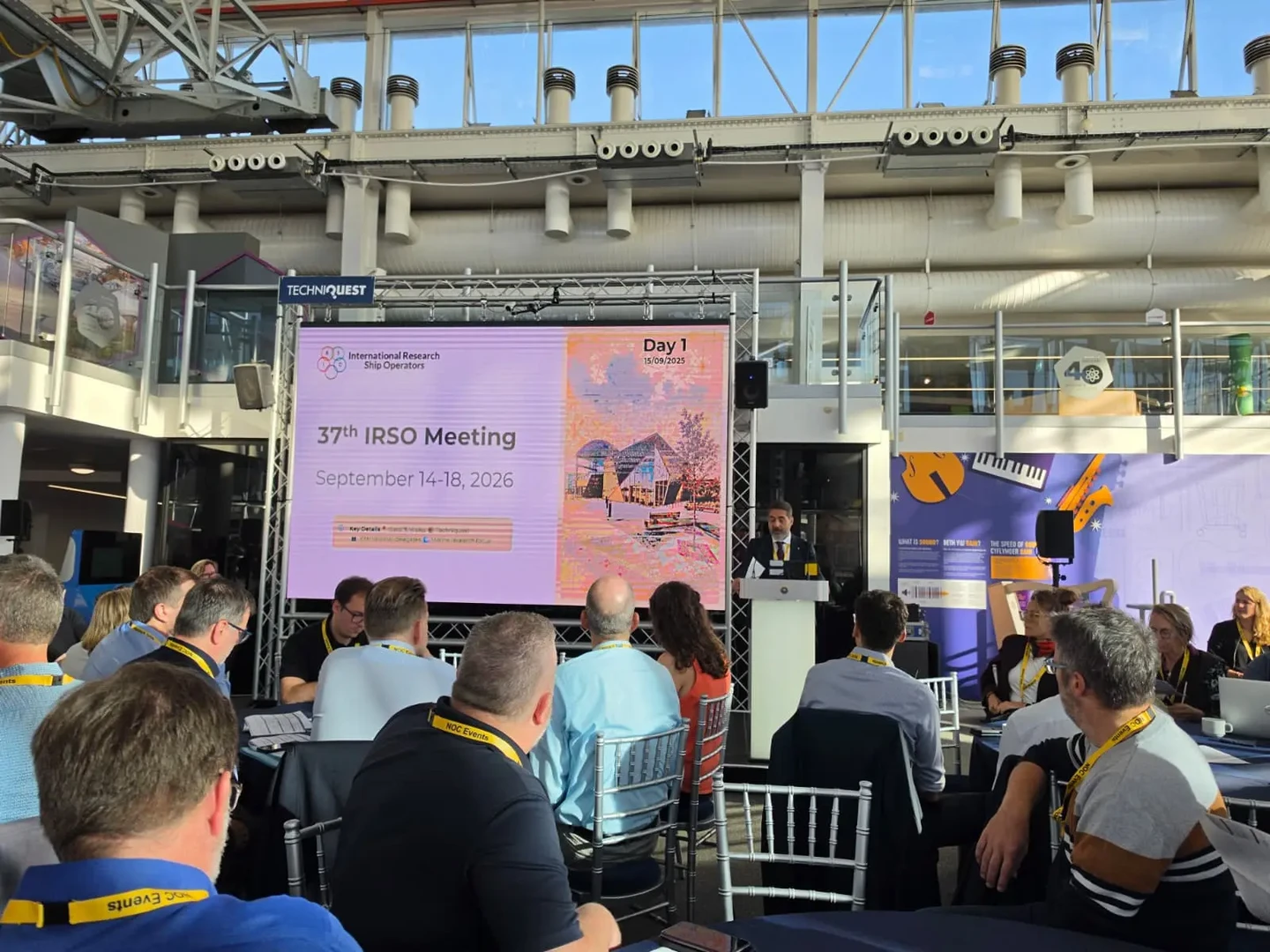
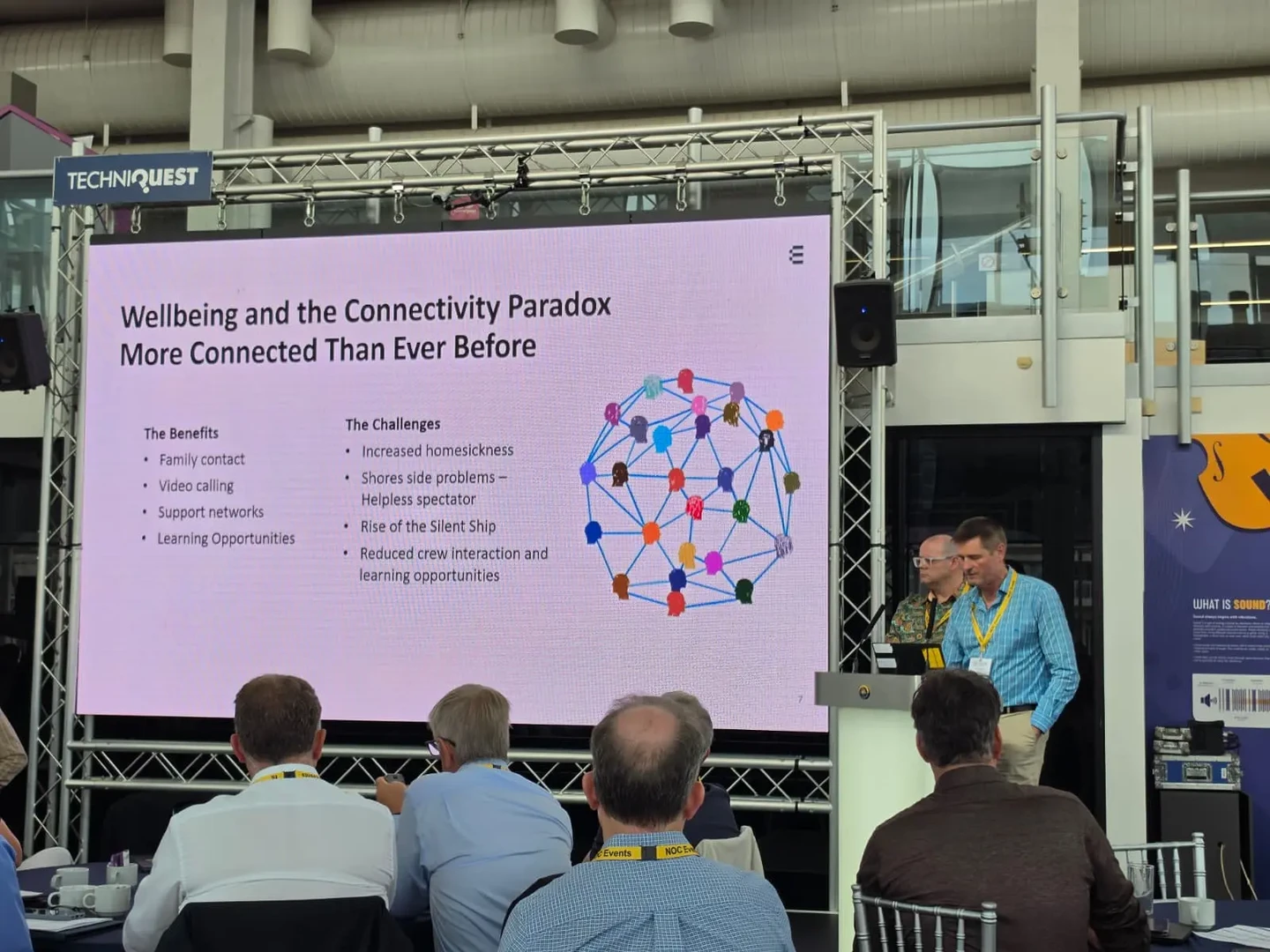
At the 37th International Research Ship Operators (IRSO) Meeting in Cardiff, OmniAccess explored one of the issues gaining increasing attention across the maritime industry: how to protect the operational technology that modern vessels depend on.
The discussion, led by Marwan Chartouny from OmniAccess, centred on IACS Unified Requirement UR E26, which introduces mandatory cyber resilience requirements at vessel level for applicable newbuilds, alongside UR E27 at equipment and systems level. But the bigger conversation goes beyond compliance.
UR E26 reflects a fundamental change taking place onboard vessels: OT is becoming connected.
From isolated systems to connected operations
For many years, IT and OT existed largely as separate environments. IT cybersecurity has consequently reached a relatively high level of maturity, while OT systems were often protected partly by their isolation.
That separation is disappearing.
Modern vessels increasingly connect operational systems to wider onboard networks, remote support services, data platforms and shore-based operations. This creates significant opportunities for visibility, automation and better decision-making — but every new connection also creates a potential pathway that needs to be understood and protected.
The implications are particularly significant for research vessels.
Alongside propulsion, steering, electrical power, navigation and safety systems, a research vessel can operate a highly specialised technology environment encompassing dynamic positioning, multibeam sonar, scientific sensors, winches, seismic equipment and laboratory and survey data networks.
The challenge is therefore not simply protecting information. It is protecting the vessel’s ability to operate safely and reliably.
This distinction is important. Traditional IT security prioritises the confidentiality and integrity of data. In OT, availability and physical safety can be paramount. A corporate IT system may be patched frequently and tolerate planned downtime. A vessel’s operational systems may remain in service for 15 or 20 years, with maintenance carefully planned around operational requirements.
Applying an IT security model directly to OT is therefore rarely enough.
UR E26: compliance across the vessel lifecycle
One of the key messages from the IRSO discussion was that UR E26 should not be viewed as a certification exercise completed at the end of a newbuild.
Cyber resilience needs to be considered throughout the vessel lifecycle: Design → Construction → Commissioning → Operation.
That means understanding what assets exist onboard and how they communicate; defining security zones and network architecture; controlling access and remote connections; establishing monitoring, response and recovery procedures; and maintaining that environment as systems and operational requirements change.
Put simply, a cyber-resilient vessel needs to be able to identify, protect, detect, respond and recover.
For research operators, this lifecycle approach is especially relevant. Scientific equipment and mission requirements evolve. Third-party specialists may require remote access. New instruments are installed. Systems that were once isolated may become connected to enable data transfer or remote support.
Cyber resilience therefore cannot be static.
Beyond compliance: understanding the real operational risk
Not every vessel currently falls within the mandatory scope of UR E26. Much of today’s research fleet predates the requirements, for example.
But regulatory scope and cyber risk are two different questions.
An older vessel may not require UR E26 compliance, yet it can face many of the same vulnerabilities as a newbuild — particularly as legacy OT is connected to modern networks and remote services.
This is where the conversation should shift from “Are we compliant?” to “Are we resilient?”
For vessel owners and operators, that starts with visibility. What systems are onboard? Which systems communicate with each other? Where are the connections between IT and OT? Who can access critical systems remotely? What happens if one of those systems becomes unavailable?
Remote access provides a good example. Vessels depend on equipment manufacturers and specialists for support, but giving multiple third parties separate VPN connections can create fragmented access paths and limited oversight. More controlled approaches, such as privileged remote access, can provide a single governed pathway with defined permissions, traceability and least-privilege access.
The objective is not to stop vessels becoming more connected. It is to make connectivity possible without losing control of the operational environment.
Building resilience into what comes next
The direction of travel is clear. Vessels will become more connected, more data-driven and increasingly dependent on digital and operational technology.
UR E26 provides an important regulatory baseline, but sustainable cyber resilience requires more than meeting a requirement at a particular point in time. It requires cybersecurity to become part of how vessels are designed, commissioned, operated and continuously evolved.
At OmniAccess, we approach this across the complete vessel lifecycle, bringing together maritime expertise, the wider cybersecurity capabilities of Marlink Cyber, and the OmniAccess Possibility Platform to help operators gain greater visibility and control over increasingly complex digital environments.
For research vessels, cruise ships and superyachts alike, the opportunity is ultimately the same: to embrace what connected technology makes possible, while ensuring that the systems behind it remain secure, resilient and ready for what comes next.
Discover the OmniAccess Possibility Platform and how we are helping create more resilient, manageable and connected vessel environments.