
The next five years of digital yachting: why the smartest investment isn’t more bandwidth
By Ernesto Esposito, Head of Technical Sales & Account Management at OmniAccess

Introduction
If someone had asked me five years ago what owners expected from their yacht’s technology, the answer would probably have been simple: good Wi-Fi everywhere and enough bandwidth to keep everyone happy. Today, those answers may be very different.
Owners are running businesses from their floating office. Children are gaming online while guests stream multiple 4K movies. Crew members rely on cloud applications for daily operations. Engineers increasingly expect real-time monitoring of onboard systems, while management companies want remote visibility into vessel performance.
At the same time, every connected device represents another potential cybersecurity risk.
The modern yacht is quietly becoming one of the most sophisticated digital environments. Yet many yachts are still being designed, or refitted, as if connectivity alone were the objective.
In reality, the challenge over the next five years is building a digital platform that allows every technology onboard to work together, relying on solid connectivity, of course.
Connectivity has entered a new era
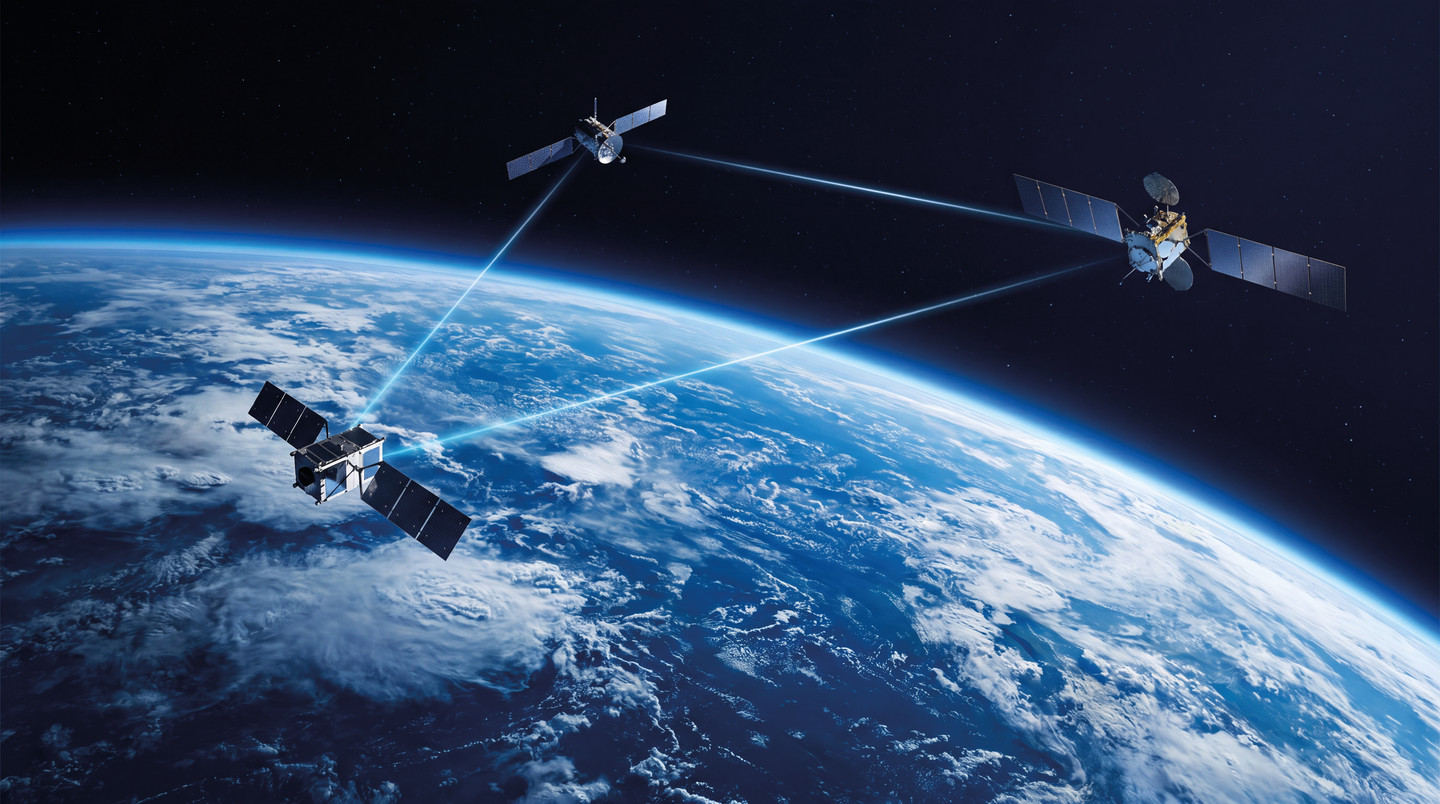
The arrival of Starlink and Eutelsat OneWeb LEO (Low Earth Orbit) satellite services has undoubtedly been one of the biggest technological milestones our industry has seen in years.
Higher speeds and dramatically lower latency have changed expectations almost overnight. Activities that once seemed impossible offshore – video conferencing, cloud collaboration, live streaming and online gaming – are now becoming part of everyday life onboard. But better internet has also exposed new problems.
Many yachts discovered that their satellite connection was no longer the bottleneck. Instead, limitations often lie within the onboard infrastructure itself.
Poor Wi-Fi coverage, ageing network switches, flat network architectures and legacy cabling suddenly become visible when users start consuming ten or twenty times more bandwidth than before.
Buying faster connectivity without modernising the underlying infrastructure is rather like installing a Formula One engine into a family hatchback. The performance potential is there, but the rest of the vehicle simply isn’t designed for it.
The yacht is becoming an intelligent ecosystem
One of the most exciting developments isn’t actually happening in communications, but everywhere else. Lighting systems are becoming intelligent. HVAC systems optimise energy consumption automatically. AV systems integrate with personal devices. Cameras, access control, environmental sensors and engineering equipment continuously generate operational data. The emergence of Industrial IoT is transforming yachts into connected ecosystems rather than collections of independent systems.
Imagine maintenance being scheduled because equipment predicts its own failure before it breaks. Imagine energy consumption automatically adapting depending on occupancy. Imagine engineers diagnosing technical issues remotely before the yacht even reaches port. The challenge is ensuring all these technologies can communicate securely and reliably without creating unnecessary complexity for crew.
Cybersecurity is no longer an option
Perhaps the biggest change in recent years has been how cybersecurity is perceived. Not long ago, cyber protection largely meant antivirus software and a firewall. Today, it’s about operational resilience.
Yachts combine owner devices, guest smartphones, corporate laptops, engineering systems, navigation equipment, entertainment platforms and dozens – sometimes hundreds – of IoT devices. Each has different requirements, and each creates different risks.
Protecting that environment requires much more than perimeter security. Network segmentation, identity-based access, secure remote connectivity, continuous monitoring and proactive threat detection are rapidly becoming essential operational capabilities rather than optional enhancements.
Importantly, the best cybersecurity solutions are often the ones guests never notice.
The cloud is reshaping life onboard
Another transformation accelerating quietly is the migration towards cloud services.
Documentation, procurement, maintenance management, operational reporting, media libraries and business applications increasingly reside in cloud environments rather than local servers. This brings enormous flexibility, but also raises expectations. If cloud services become central to yacht operations, connectivity resilience becomes key. Multiple communication technologies, intelligent traffic steering and automatic failover help ensure applications remain available regardless of where the yacht is operating.
Refitting by thinking of tomorrow, not today
Perhaps the biggest mistake we can make is designing a yacht around today’s requirements. A modern superyacht build takes years, and a network and IT refit may remain operational for more than half a decade, while technology evolves at remarkable speed.
Artificial Intelligence is already beginning to automate diagnostics, optimise network performance and improve cybersecurity. Wireless technologies continue evolving. Satellite services continue expanding. Digital twins, predictive maintenance and autonomous operational systems are advancing far faster than most refit cycles.
No owner can accurately predict which applications will become indispensable five years from now. What they can do is build an infrastructure flexible enough to accommodate them.
Thinking in platforms rather than “boxes”
For years, yachts have been built by combining excellent individual technologies enabled by single-purpose off-the-shelf devices: one to manage connectivity, another for networking, others for cybersecurity and others for IT services. While each solution might perform exceptionally well in isolation, the challenge has always been making them work together.
Increasingly, the industry is moving towards integrated digital platforms that bring these capabilities together under a common operational architecture. Rather than continually adding disconnected technologies as requirements evolve, owners and captains are looking for solutions that can grow with the yacht throughout its lifecycle.
This platform approach creates a foundation for future innovation. Whether the next evolution comes from AI-assisted operations, more advanced Industrial IoT, new satellite constellations or technologies we haven’t yet imagined, the underlying infrastructure is already prepared.
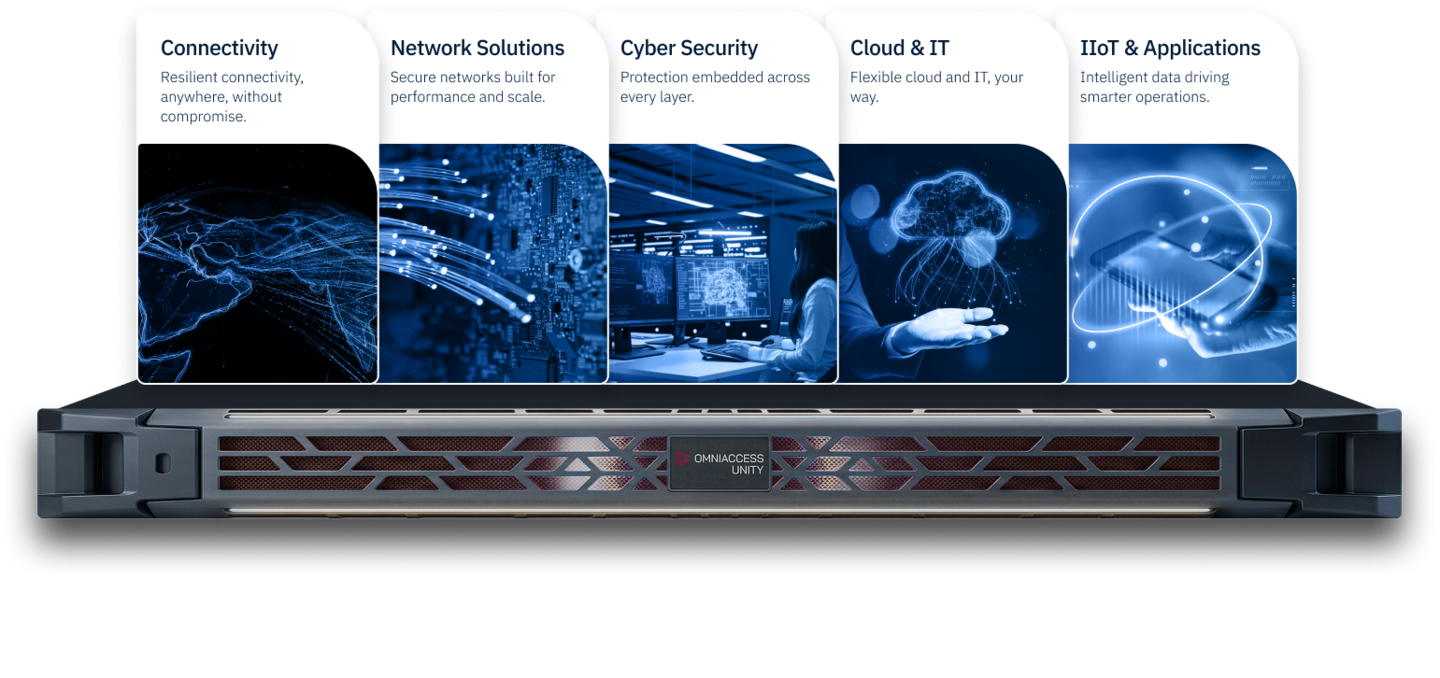
This philosophy has driven the development of Unity, the OmniAccess Possibility Platform. Unity provides the digital foundation that enables connectivity, network solutions, cybersecurity, Cloud & IT, and IIoT & applications to operate as interconnected capabilities rather than separate domains. The result is an ecosystem in which different technologies can work together and evolve alongside the yacht and the people who use it.
The best technology is “invisible”
The best technology onboard is rarely the most visible. Guests shouldn’t think about Wi-Fi. Crew shouldn’t worry about changing between internet providers. Engineers shouldn’t manually collect data from independent systems. Owners shouldn’t wonder whether it’s safe to access sensitive business information from the yacht.
Everything should simply work. But for this, you need to think in “platforms”.

See what’s possible
The shift from “boxes” to platforms is already happening. At the Monaco Yacht Show, we’ll bring this thinking to life through interactive demo stations of the OmniAccess Possibility Platform and the technologies it enables.
Visit us at Stand DS14 – Darse Sud – to explore what this could mean for your yacht and speak with our experts about building a digital foundation for what comes next.
Sept. 23-26, 2026
This article was published in Superyacht Knowledge magazine